
Today’s investor no longer operates within a single market or platform. A typical portfolio may now span ETFs, listed equities, onchain positions, private market exposure and accounts held across multiple providers. Access has broadened. Reporting has not kept pace. Tax compliance remains fragmented, manual and vulnerable to error.
CryptoBooks was built to address one of the most demanding parts of this environment: reconstructing crypto activity across wallets, exchanges, protocols and rapidly changing tax rules. Crypto, however, was only one part of the picture. Their portfolios already spanned multiple asset classes, platforms and reporting regimes, and the platform had to evolve accordingly.
Today we introduce Finbooks: a unified platform to track, declare and optimise investments across both traditional and digital assets. It extends the discipline developed in crypto tax reporting to the wider investment landscape, bringing portfolio tracking, tax reporting and compliance together within a single system.
Built from crypto complexity
Finbooks builds on a platform shaped by one of the most demanding tax challenges of the last decade: making sense of crypto activity spread across wallets, exchanges, onchain protocols and rapidly evolving regulatory frameworks.
Since 2022, first in Italy and later across Portugal, Spain, France, Germany and the UK, we have developed a tax engine designed to classify events accurately, reconstruct fragmented historical data and adapt to different local rules.
That starting point required us to solve problems that many traditional investment tools do not encounter to the same extent: incomplete records, cost basis reconstruction and significant differences between jurisdictions. Finbooks now applies that same discipline across a broader investment landscape.
Unified compliance: one platform for every asset
Modern investors move between traditional finance and digital assets, yet fragmented tools and manual spreadsheets still create avoidable errors and unnecessary reporting friction. Finbooks helps reduce that operational friction.
Our infrastructure applies the relevant tax treatment to each asset class, turning multi-source investment data into a structured reporting framework across the entire portfolio. From traditional brokerage accounts to decentralised protocols, investors gain a unified view of holdings, records and reporting requirements.
The workflow: from fragmented data to unified control
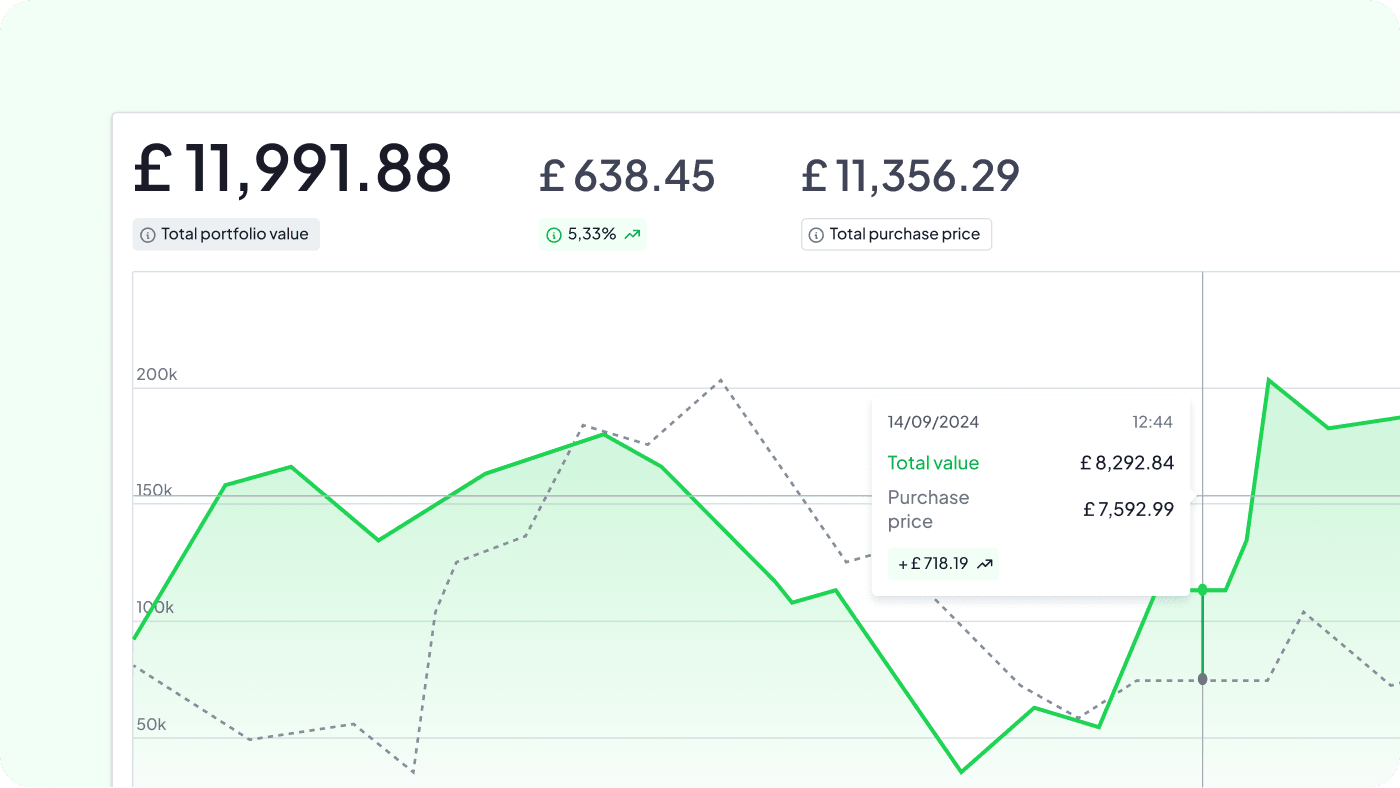
Finbooks transforms the fragmented landscape of modern investing into a single, automated workflow, bringing together data, tax logic and portfolio visibility across asset classes, platforms and jurisdictions. Whether you are a long-term investor building wealth steadily or an active trader managing frequent transactions across markets, our engine helps keep your positions, records and tax reporting aligned within a single system.
This workflow is built around a set of core processes that organise, reconcile and interpret your investment data before producing compliant outputs:
multi-source aggregation: connect brokers, fintech platforms, exchanges and self-custody wallets, consolidating every transaction across your financial ecosystem;
reconciliation engine: Finbooks detects missing prices, duplicated transactions and structural anomalies, normalising fragmented raw data before applying tax logic;
localised tax logic: each transaction is interpreted using the fiscal framework of your country of residence, helping ensure that calculations follow the correct reporting rules;
strategic tax optimisation: identify unrealised losses and simulate tax outcomes before year-end to manage your tax position proactively;
audit-ready filing: generate localised tax forms supported by detailed documentation, including a full PDF record of calculations and classifications.
You can connect your platforms, sync transactions and reconcile your data entirely for free. A paid subscription is only required when you are ready to unlock your official tax reports and supporting documentation.
Why Finbooks?
Finbooks is a name that reflects both the breadth of the market we serve and the precision the work requires.
“Fin” stands for Finance: the wider world of modern investing, now spread across asset classes, platforms, jurisdictions and reporting frameworks.
“Books” stands for Bookkeeping: the reconstruction, classification and accounting precision required to turn fragmented financial data into usable tax and compliance outputs.
Together, they reflect our evolution from a crypto-focused platform into a unified system for investment tracking, tax reporting and compliance.
You invest. We handle the tax.
The transition from CryptoBooks to Finbooks is the final step in building the infrastructure for the modern, borderless investor. By combining the complexity of modern markets with the discipline of professional bookkeeping, Finbooks brings investment data and reporting into a more coherent operational framework.
We’ve built the engine. We’ve mastered the complexity. Now, whether you are investing through traditional markets, onchain environments or both, Finbooks gives you a unified system for portfolio tracking, tax reporting and compliance.
Experience the new standard of high-precision investment reporting. Try Finbooks for free.

You invest. We handle the tax.